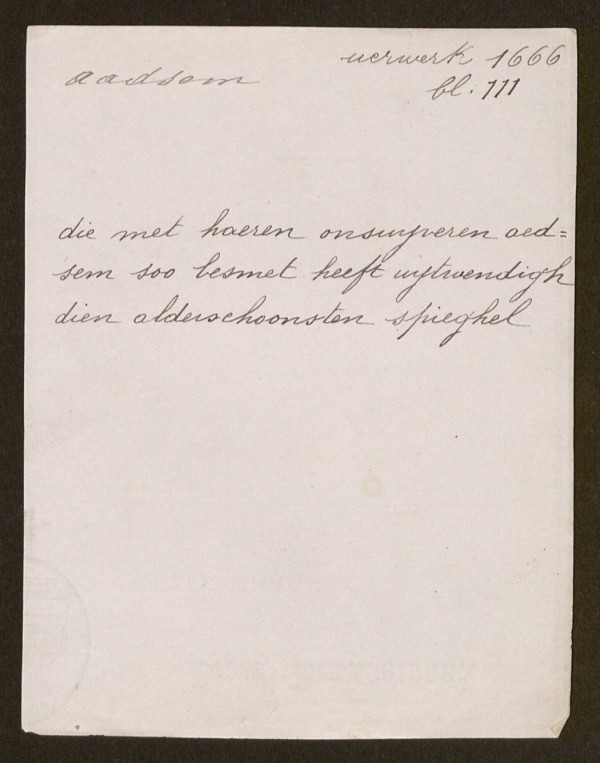
Woordentas
Manuscript | 19de eeuw | Flanders | Dutch
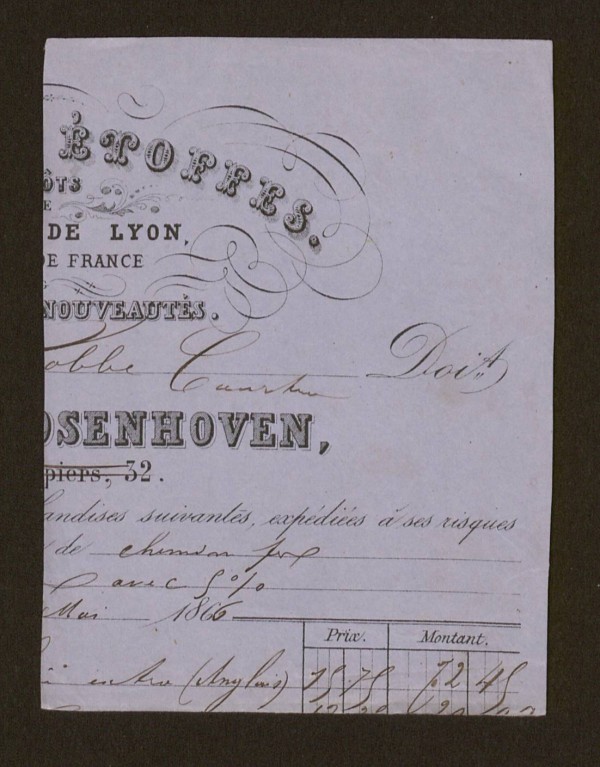
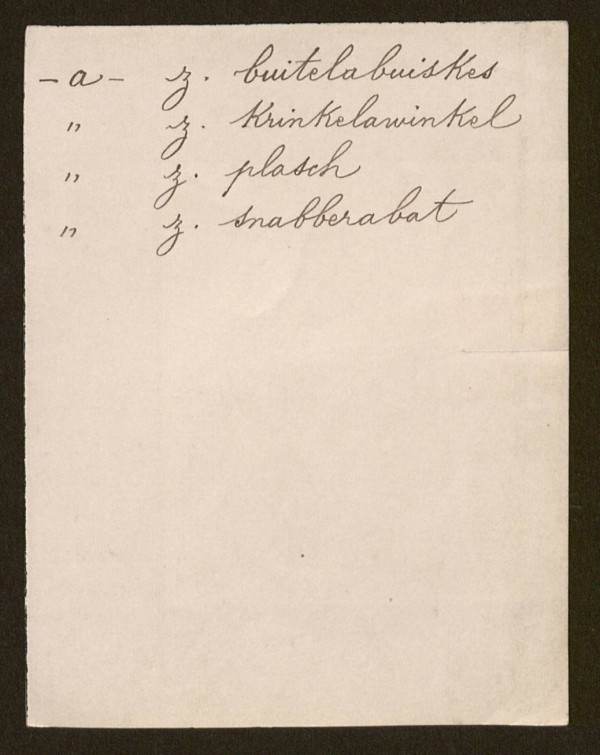
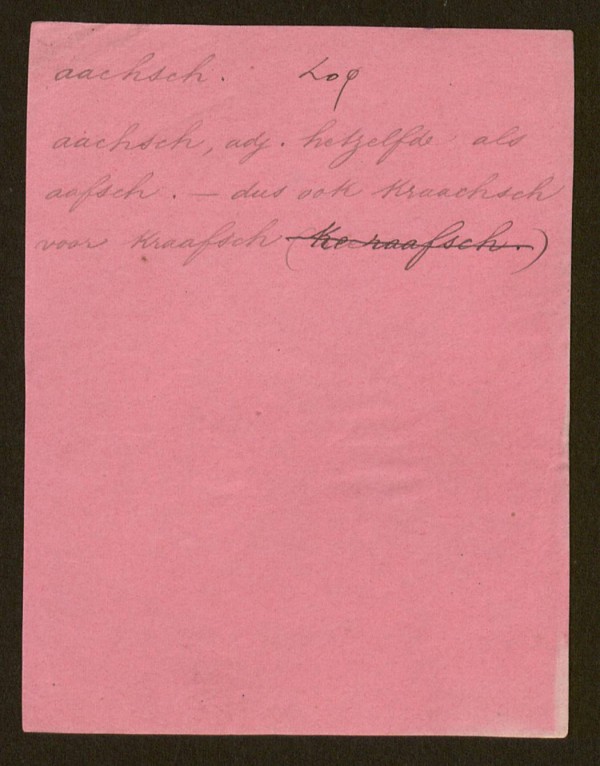
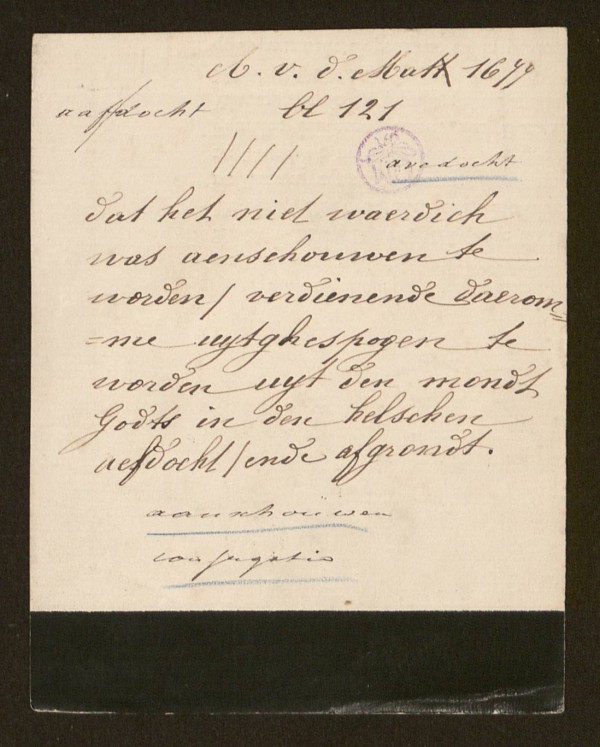
Guido Gezelle was passionate about language. From an early age he collected songs, legends, nursery rhymes, proverbs and words. A lifetime of collecting eventually resulted in the Wordheap, fifty boxes containing approximately 150,000 cards with linguistic notes. The name comes from Gezelle himself: tas here means a large heap or pile. The Woordentas is based on two sources: the spoken vernacular and words Gezelle found in old books. Gezelle wrote down all the interesting words he heard. So great was his passion for collecting that the priest wrote down words related to the sins of the flesh while he was taking confession. He also encouraged acquaintances and readers to send him words. That extensive network forms an important part of Gezelle’s correspondence. Moreover, he wrote down thousands of words from (mainly old) books. Many words and expressions in Gezelle’s reference library are underlined in pencil with a corresponding card in the Woordentas. The Woordentas was Gezelle’s personal database. He drew on it for his articles in the magazines ‘Jaer 30, Rond den Heerd, Loquela and Biekorf. Research shows that the virtuosity of his poetry, especially in his later collections, is based in his language study. Gezelle believed that the older the language, the closer it was to its original form and the purer it was. Ultimately, he thought the regional dialects ??should form a single Flemish language, as opposed to the “general” Dutch imposed from the North. His ultimate dream: to write a dictionary of the Flemish language one day. Gezelle never realised his dream. He did, however, make the Woordentas available to the Dictionary of the Dutch Language in 1898.
From:Collection title
The makers
In the good hands of
Openbare Bibliotheek Brugge, GG104
Printer's mark
More about Collection title
Collection description
