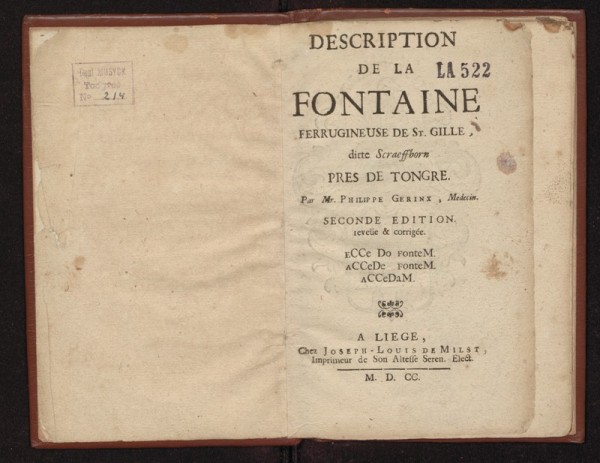
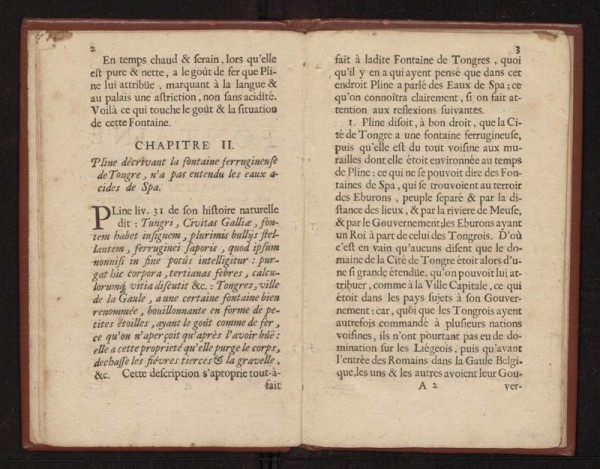
Description de la fontaine ferrugineuse de St. Gille, ditte Scraeffborn pres de Tongre
Early modern edition | 1700 | Liège | French
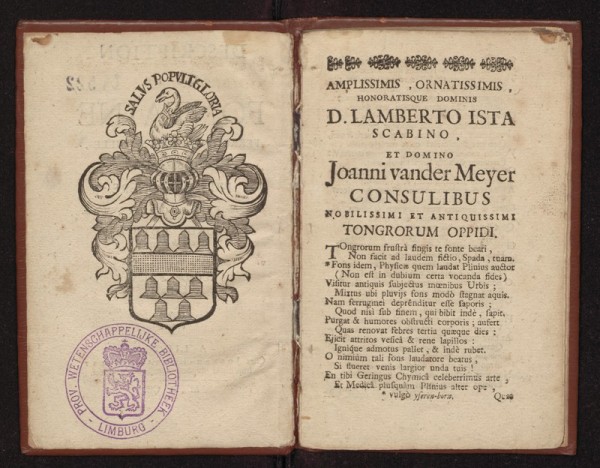
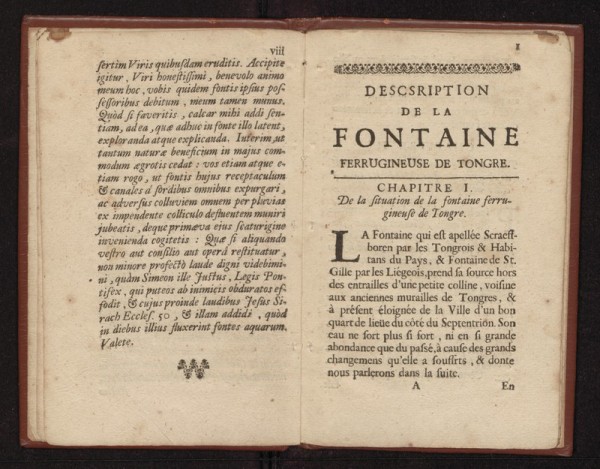
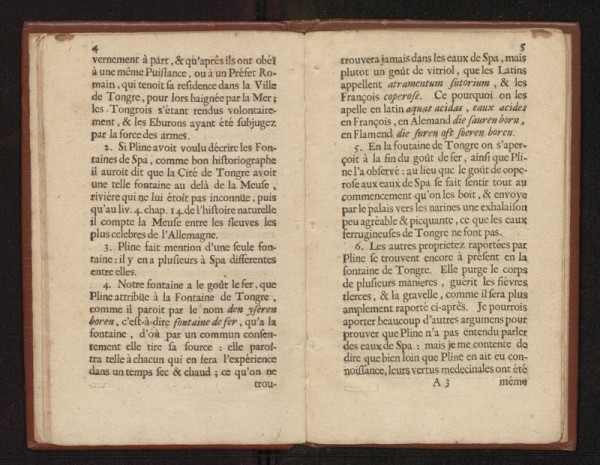
Medicinal properties have been ascribed to spring water since ancient times. Beginning in the mid-16th century, interest in books about such springs and “drinking cures” gained popularity in higher circles. Medicinal springs were a potential source of income. Interest in the Plinius fountain in Tongeren grew during the same period. According to a 1542 work by Remacle Fuchs, and also according to his brother Gilbert (1559), the Roman author Pliny referred to a fountain in Spa with his description of a ferruginous and effervescent spring in the civitas Tungrorum. On the other hand, Philippe Gerinx (1549-1604), a physician in Sint-Truiden, stated in a 1578 booklet that Pliny did indeed refer to the Gillis spring near Tongeren. He later compared the springs of Spa and Tongeren and came to the same conclusion. A century later, when the lawyer Philippe de Germeau was cured of an ailment in 1699 after a cure in Tongeren, he urged the Tongeren magistrate to republish Gerinx's work. Liège printer J.L. de Milst published it in 1700 with modifications by Canon J.A. Cuypers, who was criticized for his changes. The reissue led to a revival of Tongeren as a spa city. In a meeting of doctors as early as 1700, the healing power of Tongeren's waters was officially established. That report was also printed.
From:Collection title
In the good hands of
Bibliotheek Hasselt Limburg, OD-D-1780
Printer's mark
More about Collection title
Collection description
